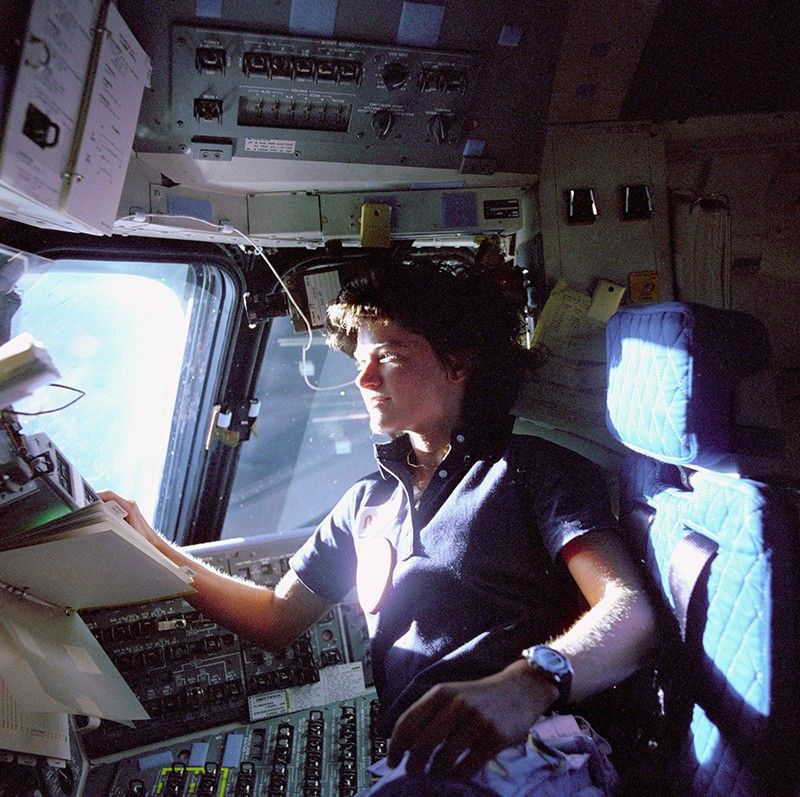
The world continues to reflect on the extraordinary life and legacy of Sally Ride, a pioneering physicist, astronaut, educator, and national icon whose achievements reshaped the history of space exploration and opened doors for generations of women in science and engineering. Although she passed away on July 23, 2012, in La Jolla, California, her influence remains deeply woven into the fabric of modern scientific progress and space exploration.
Sally Ride made history on June 18, 1983, when she became the first American woman to travel into space aboard the Space Shuttle Challenger during the STS-7 mission. At just 32 years old, she stepped into a role that carried immense historical significance, becoming a global symbol of courage, intelligence, and breaking barriers in a field long dominated by men. Her journey was not only a personal achievement but also a defining moment for American space exploration and gender equality in science.
Born in Los Angeles, California, Ride displayed exceptional academic ability from a young age. She pursued higher education at Stanford University, where she earned bachelor’s degrees in physics and English, followed by a master’s degree and a Ph.D. in physics. Her academic path reflected both intellectual curiosity and discipline, qualities that would later define her career at NASA and beyond.
In 1978, Ride was selected from thousands of applicants to join NASA’s astronaut program as part of the first group that included women. This historic selection marked a turning point in the agency’s evolution and signaled a broader shift in opportunities available to women in science and technology. After years of rigorous training, she earned her place on the STS-7 mission, where she operated the shuttle’s robotic arm and helped deploy satellites, contributing directly to the success of critical scientific experiments in orbit.
Her first spaceflight captivated the world, with media attention focusing not only on the mission itself but also on the significance of her presence as the first American woman in space. Despite the intense public scrutiny, Ride was widely recognized for her calm professionalism and scientific precision. She consistently emphasized the importance of the mission over personal fame, often redirecting attention to the team effort behind NASA’s achievements.
In 1984, she returned to space aboard the Space Shuttle Challenger for her second mission, STS-41-G. During this flight, she continued her work in satellite deployment and Earth observation, further contributing to NASA’s expanding research efforts. Her performance across both missions solidified her reputation as a skilled astronaut and respected member of the NASA corps.
Following the tragic Challenger disaster in 1986, Ride was appointed to the Rogers Commission, the panel responsible for investigating the accident. Her involvement demonstrated the trust placed in her judgment and technical expertise. Years later, she also served on the investigation board for the Space Shuttle Columbia disaster, making her the only individual to contribute to both major shuttle accident investigations.
After retiring from NASA in 1989, Ride transitioned into academia, joining the faculty at the University of California, San Diego. There, she continued her work as a physicist and educator, inspiring students through teaching and research. She remained deeply committed to improving science education and expanding opportunities for young people, particularly girls, in STEM fields.
In 2001, she founded Sally Ride Science, an organization dedicated to encouraging young students—especially girls—to pursue careers in science, technology, engineering, and mathematics. Through this initiative, she helped develop educational programs, workshops, and outreach efforts designed to make science more accessible and engaging for future generations.
Throughout her life, Ride received numerous honors and recognitions, including induction into the Astronaut Hall of Fame and the National Women’s Hall of Fame. Her contributions were celebrated not only within the scientific community but also across broader society, where she became a symbol of perseverance, intelligence, and quiet determination.
Beyond her professional achievements, Sally Ride is remembered for her humility, thoughtfulness, and commitment to education. She never sought fame for its own sake, instead focusing on the advancement of knowledge and the empowerment of others. Her legacy continues to inspire astronauts, scientists, educators, and students around the world.
Though she is no longer physically present, Sally Ride’s impact remains firmly anchored in history. Her journey from physicist to astronaut to educator reflects a life dedicated to pushing boundaries and expanding human potential. In La Jolla and far beyond, her memory endures as a reminder that courage, curiosity, and determination can change the course of history.
Leave a Reply